
Terra Thrift
Creating a “transformational game” experience
Project Overview
Terra Thrift is a transformational experience that was showcased at the NYC Games for Change Festival in 2022 July. It’s a collaborative game where players learn about fabric sustainability and practice how to read a label.

ROLE
Academic clientele project
Game UX Designer
PLATFORM
Mobile & TV Screen
PERIOD
5 months
(Spring 2022)
RESULT
G4C Festival Showcase
TEAM TOPIC STUDY
Theme of the Year

The 2022 theme for the Games for Change Festival was environmentalism. Our client wanted us to produce an experience that can raise people’s awareness in environmental protection.
The game should consider the social aspect of games for change community. People should have fun together and can be transformed through communication and enjoyment.
The game is experienced at the Games for Change Festival in a conference setting. The experience runs in a 90 minute session and only for 1 day.
The attendees of the festival within the age range of 18 - 60 who are willing to learn new knowledge and information about the topic of environmentalism.
TOPIC RESEARCH
Team Decision & Research
To decide what type of environmentalism we would want to explore, we researched various topics that are in environmentalism and built a domain map based on our results.
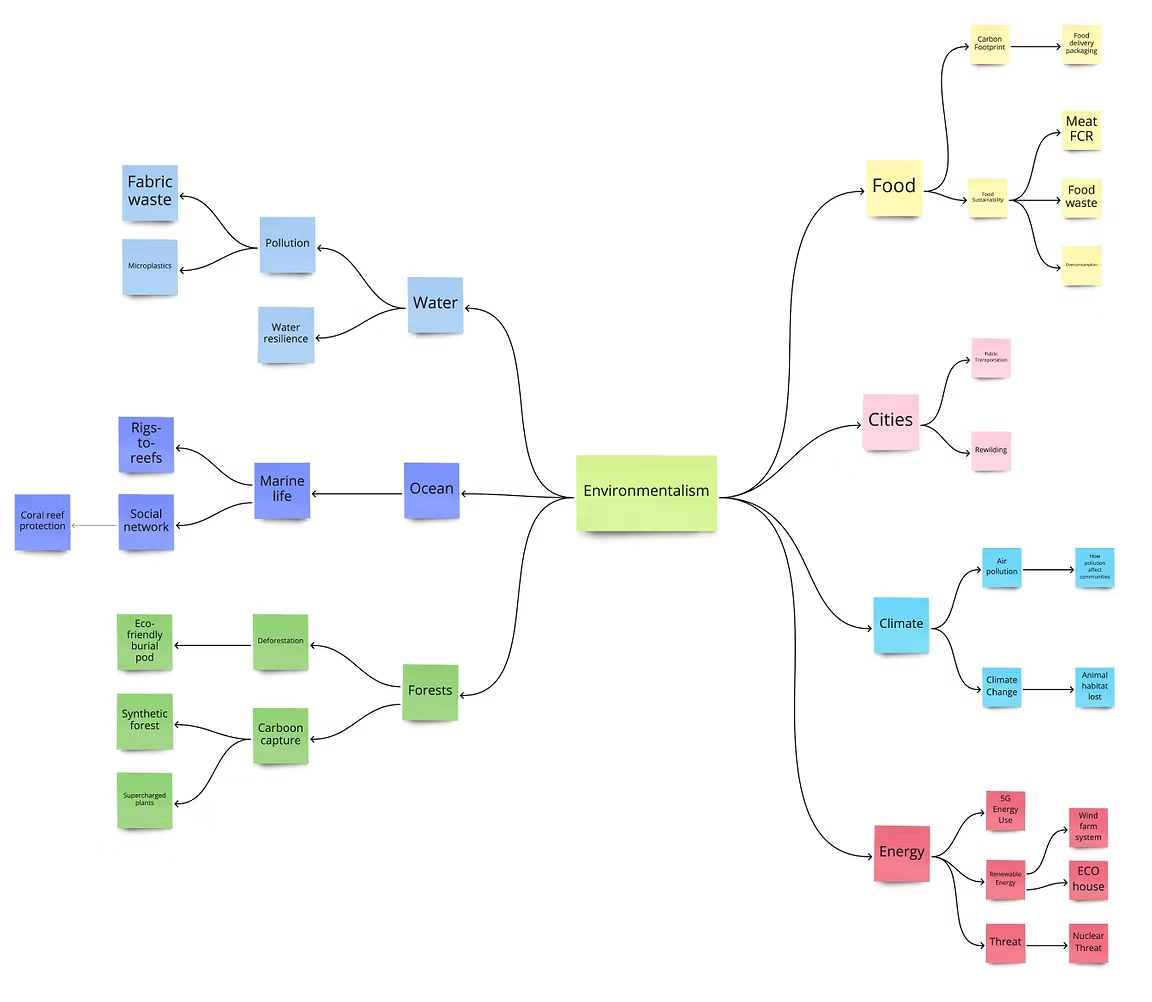
We chose fabric sustainability because :
- The fashion industry causes severe pollution to the environment
- The United States generates an average of 25 billion pounds of textiles per year. 85% of fabric goes to landfills. These textiles can take up to 200+ years to decompose in landfills.
- Everyone buys and wears clothes. It is a topic that can be related to many
- People lack the general knowledge of fabric cycles
- People are oblivious to their actions than what they’re actually causing.
- The conference was being held in NYC which is a big fashion hub
- Introducing this topic seemed appropriate because the place is heavily populated with people of fashion. (Fashion institutes, shopping hub, events, etc).
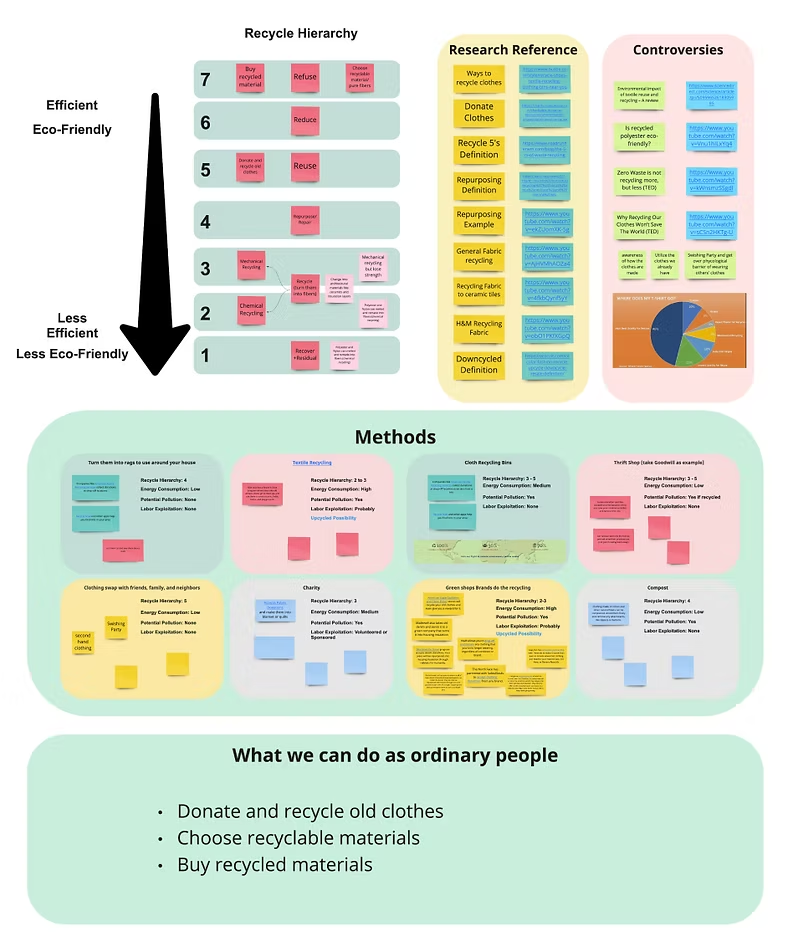
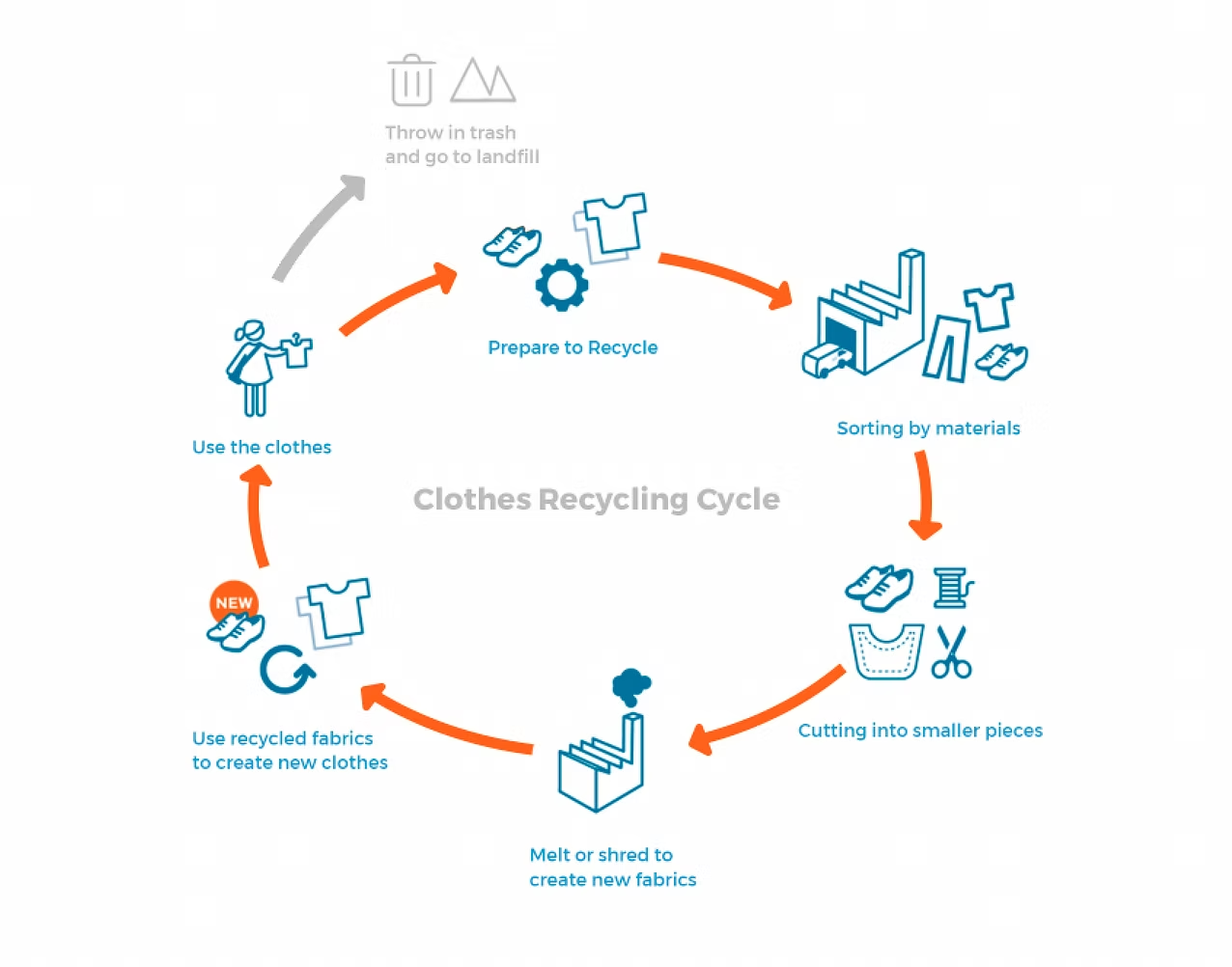
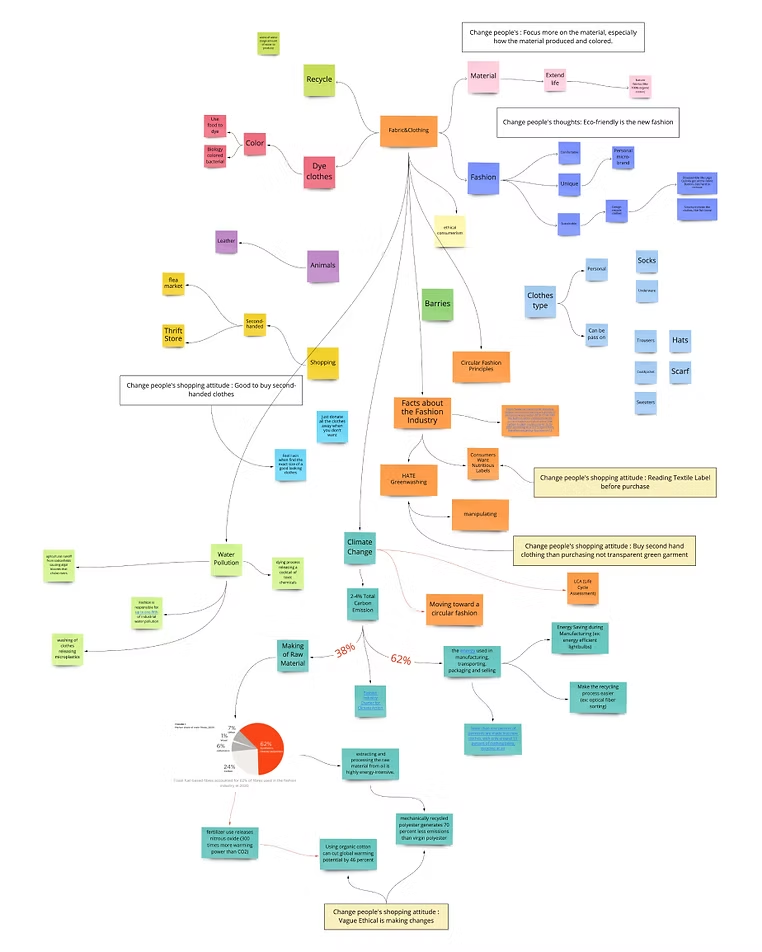
As a team, we conducted a series of mapping exercises to understand the clothing lifecycle, creating domain and hierarchy maps to organize our findings. From there, we narrowed our research to a specific area of focus within the broader fabric lifecycle.
RESEARCH - CONTINUED
Subject Matter Experts (SME)
We conducted meetings to understand their perspective on these topics that we have found in our research for a clear and feasible project direction.
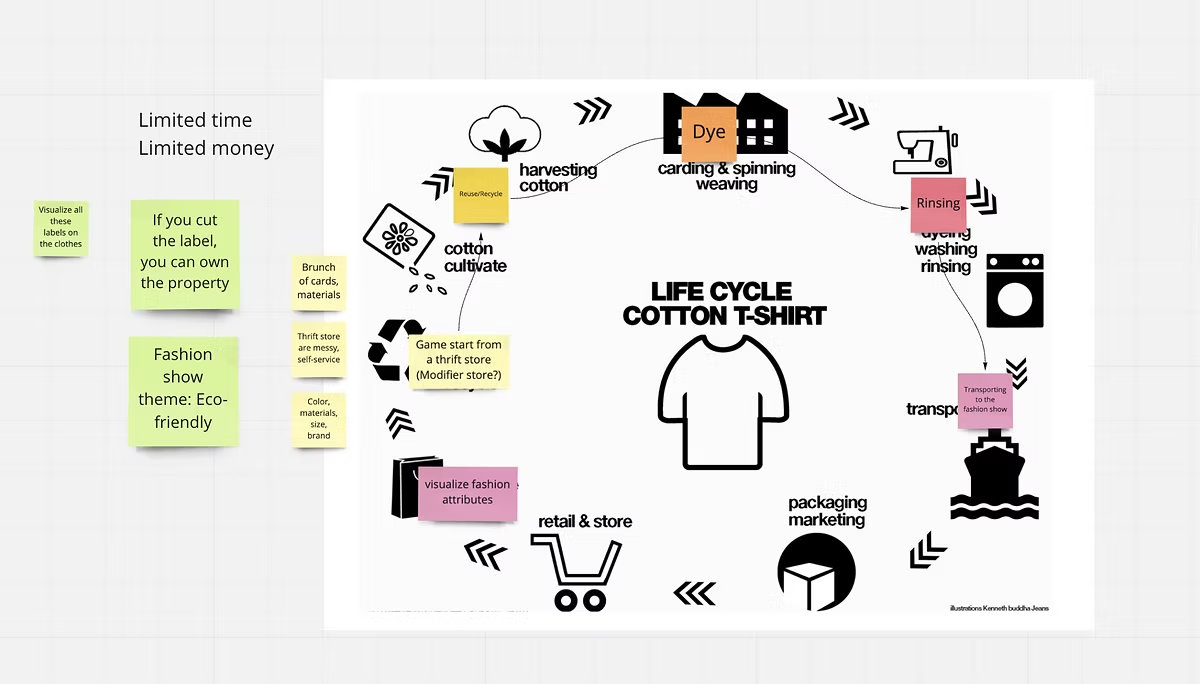
Olivia Professor at Carnegie Mellon University, IDEATE in textile fabrication art
Interview Summary:”Introduced to us the fabric life cycle in manufacturing cotton t-shirts.””Social concerns vs. environmental concerns in textiles & fashion industry are different”
SantiagoFabric expert who works at a fashion industry, highly interested in sustainable fabric practices
Interview Summary:”Recycling clothes is as expensive as manufacturing them””Brands manufacture clothes based on trend - Ex. fast fashion””Trend is largely affected by consumer behaviors rather than the fashion industries. The industry caters to consumer needs. It doesn't work vise versa”
The TakeawaysA. Mass production is at the heart of what’s causing major pollutionB. The key drivers are consumer behavior and trend.
INTERACTIVE PROTOTYPING
Journey Mapping
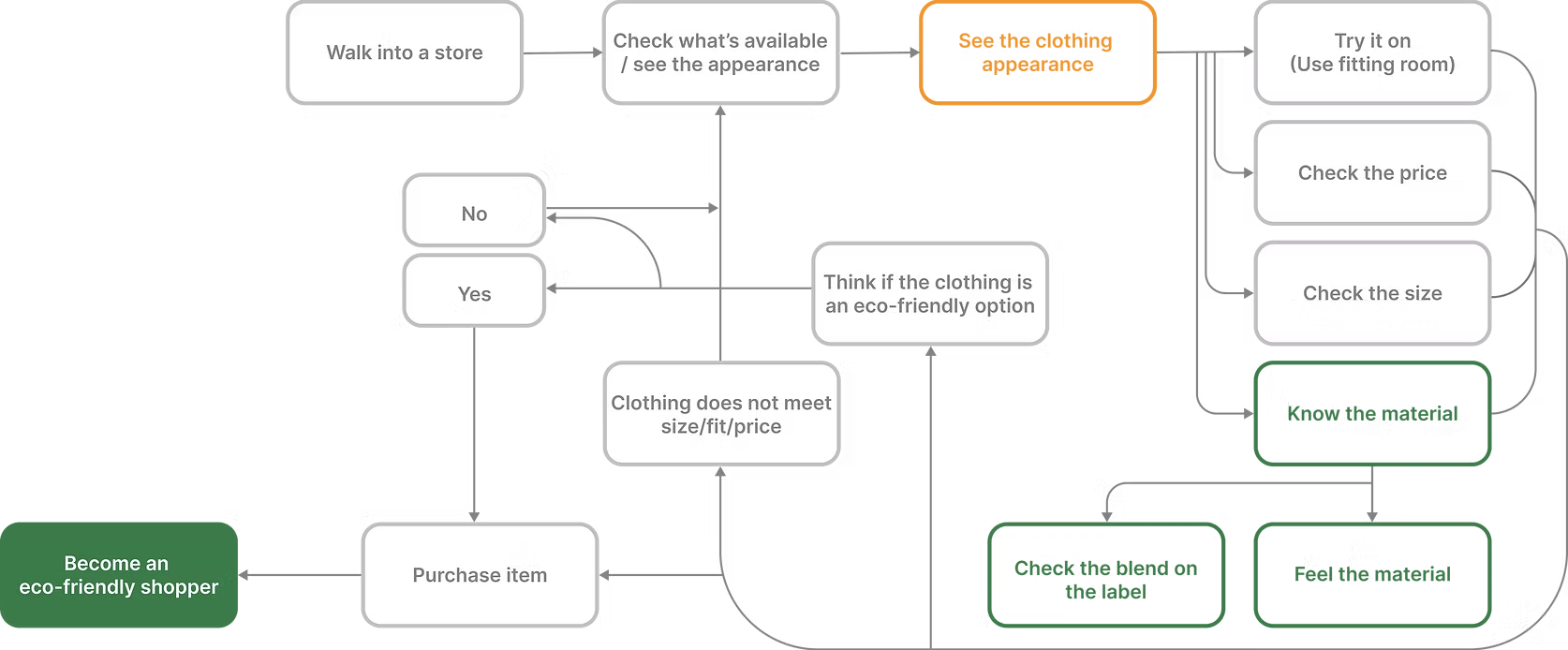
One of the major takeaways from interviewing the SMEs were that in order for the industries to change their fabric practices, we need to change the minds of the consumers.From this information, we created a Shopping Journey Map to list the possible behaviors of a consumer in a shopping experience for clothes to see what we can choose to change.
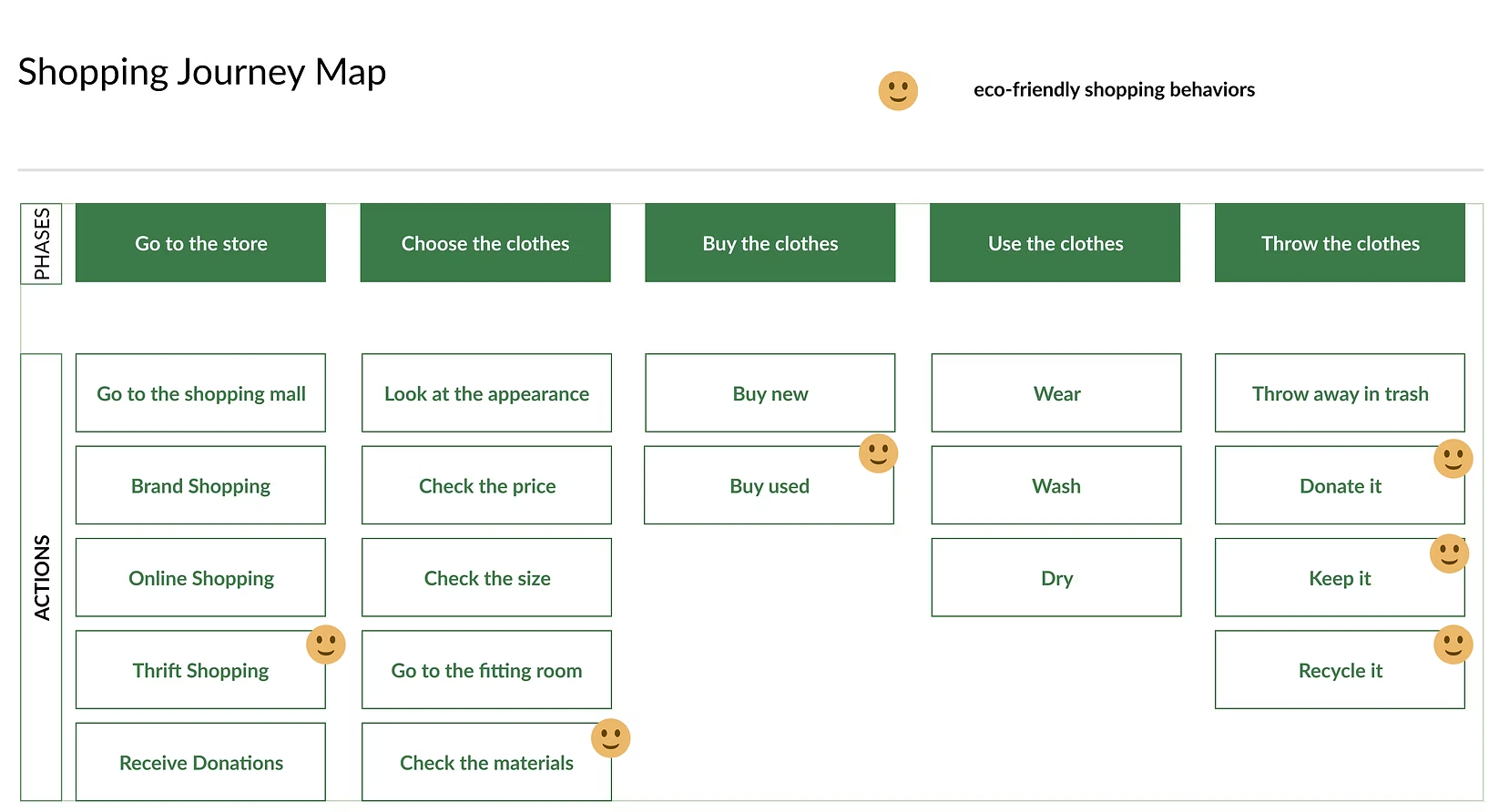
From the journey map, we understood some of the good eco-friendly practices.We came down to the high level purpose of our game which was :
'Let’s create more eco-friendly shoppers'
TESTING
Test Goal - Point Validation
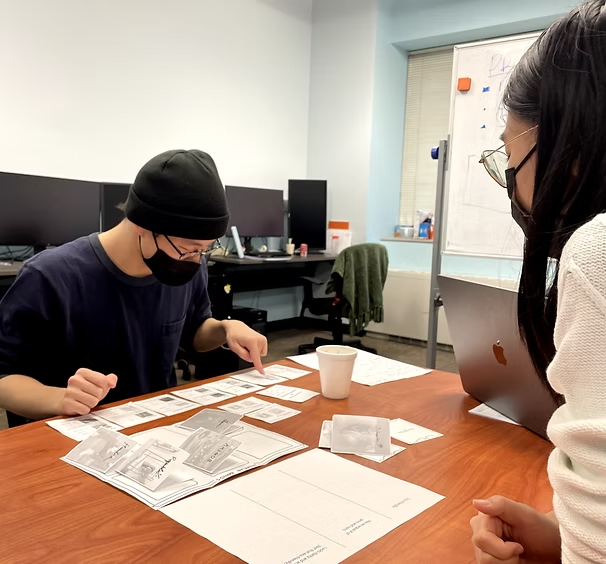
1. Understand the effective teaching & learning methods.2. Discover hidden barriers that prevent the eco-friendly shopping behavior.
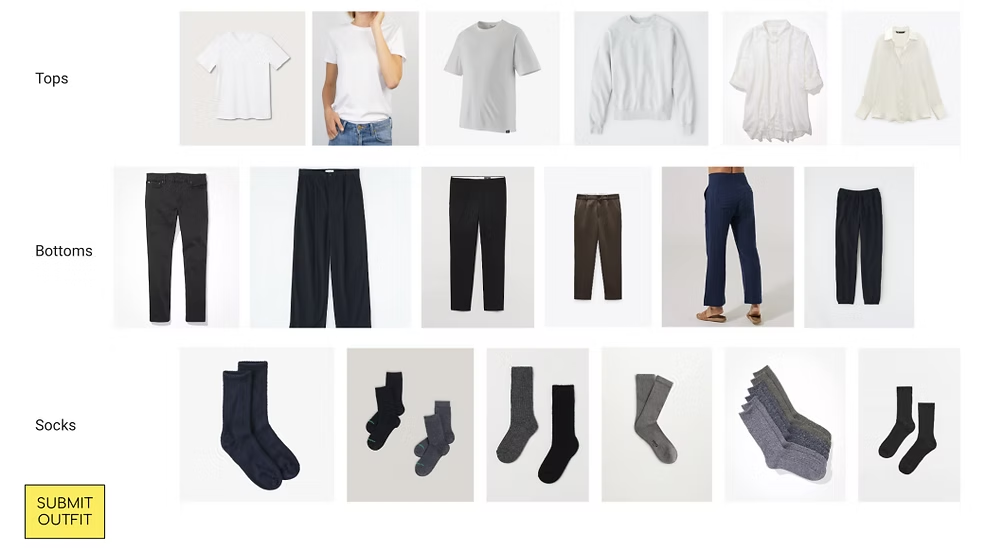
Prototype A - Go online shopping, “eco-conscious mode”To learn how well the participants understand the level of eco-friendliness of each material presented on the screen.
Prototype B - Educate by Material GuidebookTo observe the likelihood of learning new information and applying it to solve the game.
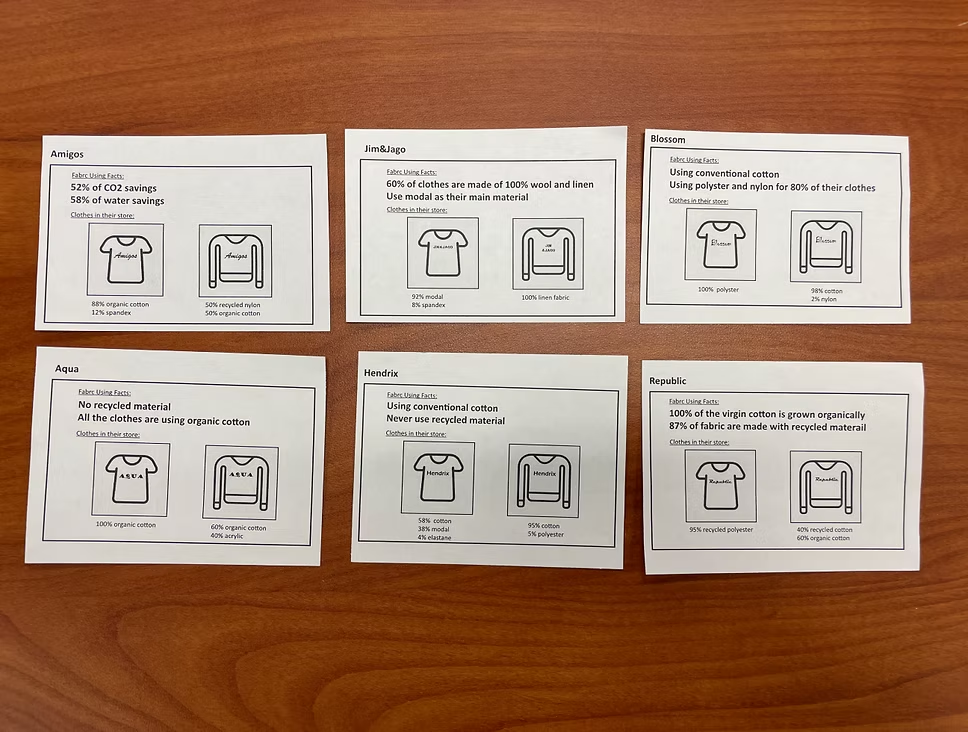
Prototype Test Takeaways
- Participants can notice subtle differences between different types of cotton.
- Participants act more carefully because they are in a user testing setting.
- Price and style factor in when choosing clothes.
- The method of teaching fabric knowledge and making the participants apply that knowledge into problem-solving works well in a game.
- The irony in fashion brands mission statement doesn’t come across as obvious in the specific game mechanism.
- Participants can only learn limited amount of information at a time to be able to apply that knowledge effortlessly.
IDEATION
Shopping User Flow
Next, I created a flow of a shopping experience to see where in the process shoppers can change their ways to become more environmentally conscious shoppers.
Whiteboarding
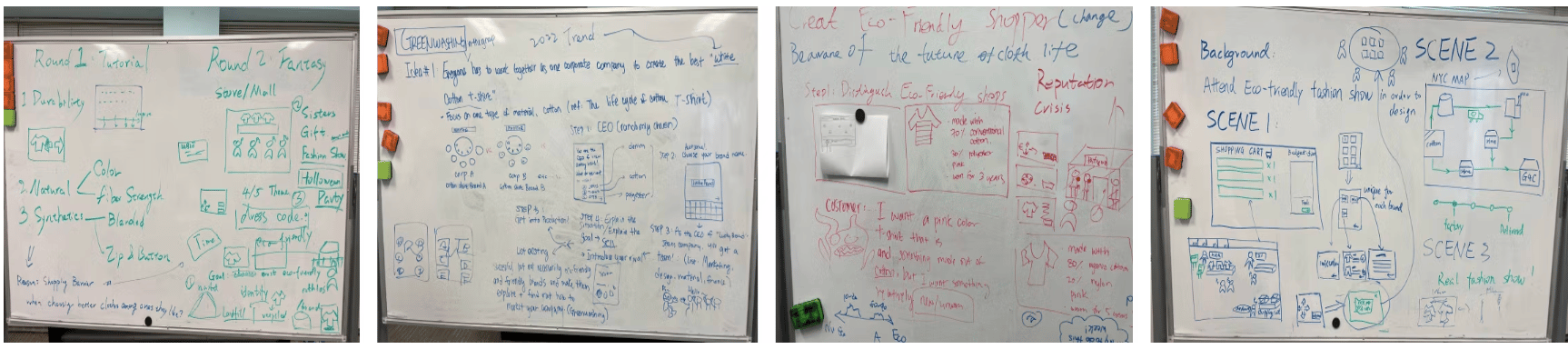

Revised Game Mechanics
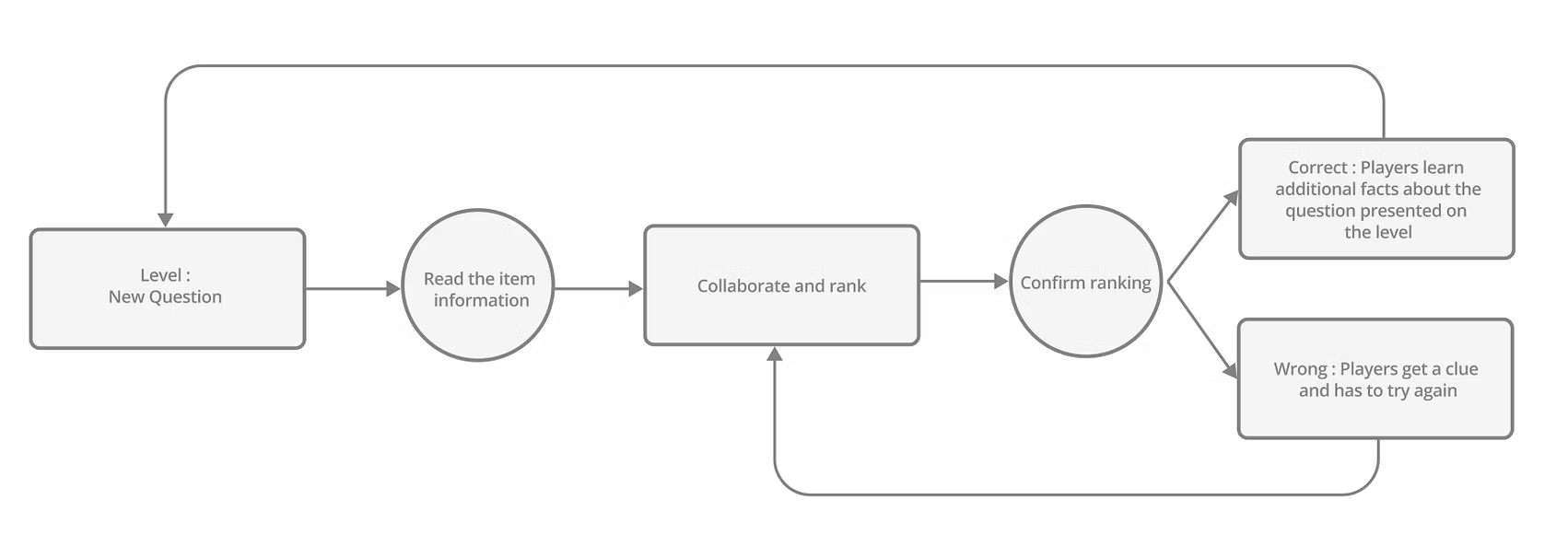
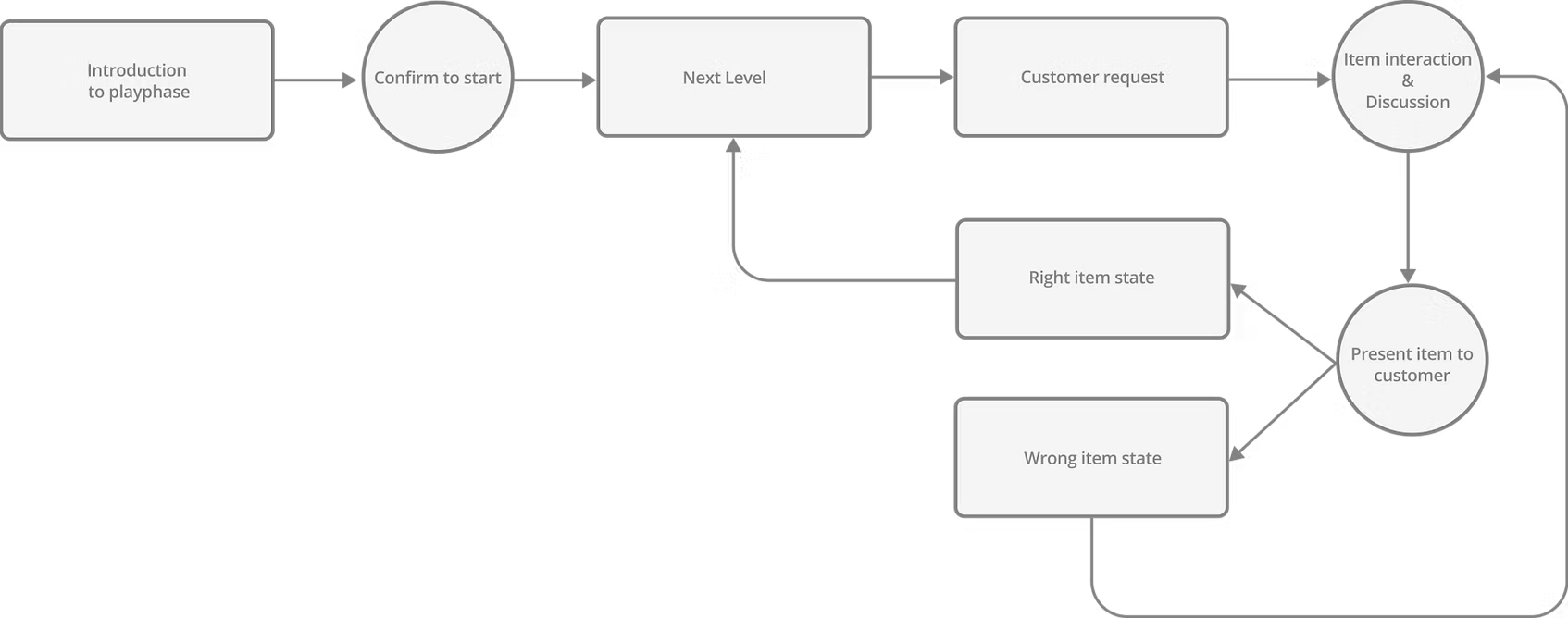
The refined experience reflects the rapid prototype #2 and became a two-phase game.
Phase 1: Player Tutorial Mode
Phase 2: Player Game Mode
PROTOTYPING
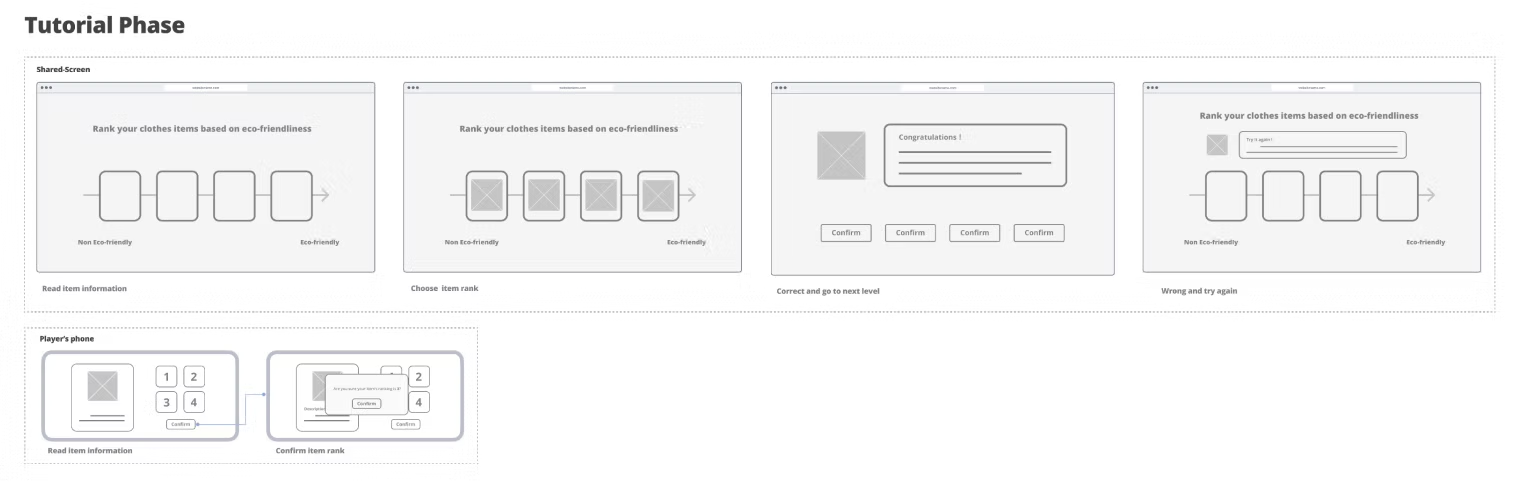
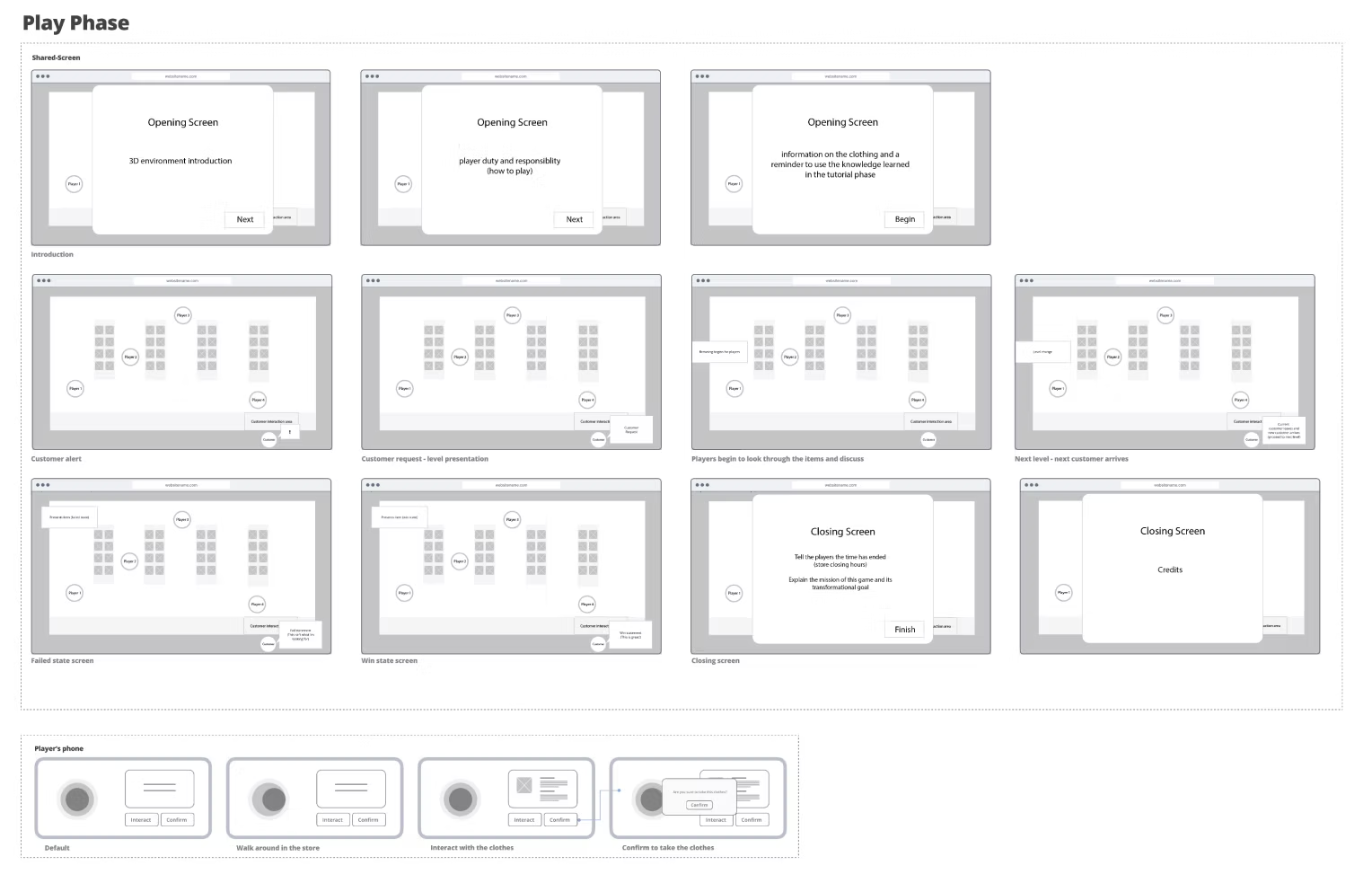
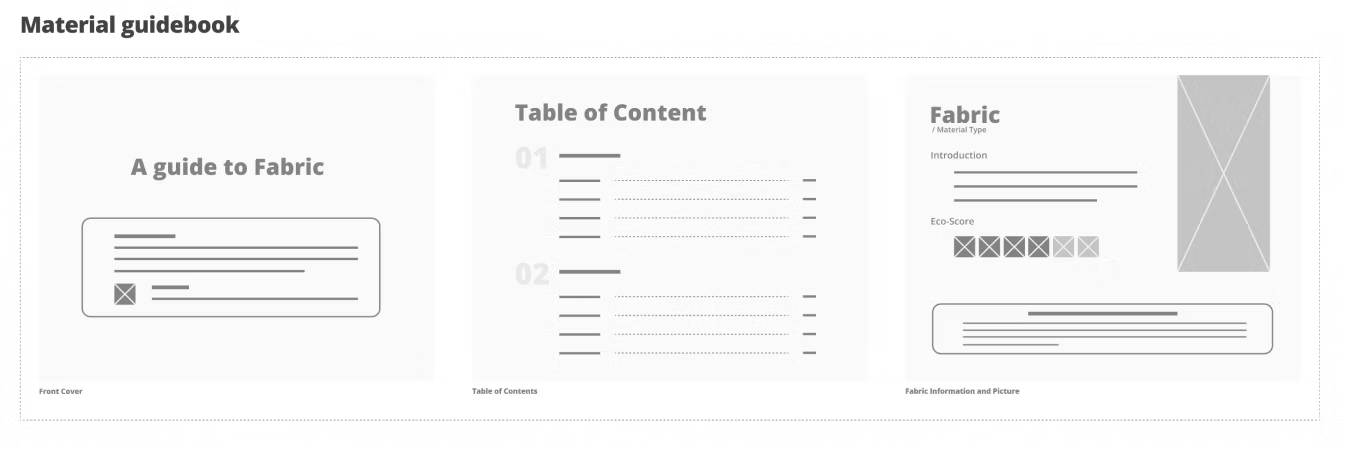
Wireframes
TESTING & ITERATION REFINEMENTS
Usability Testing
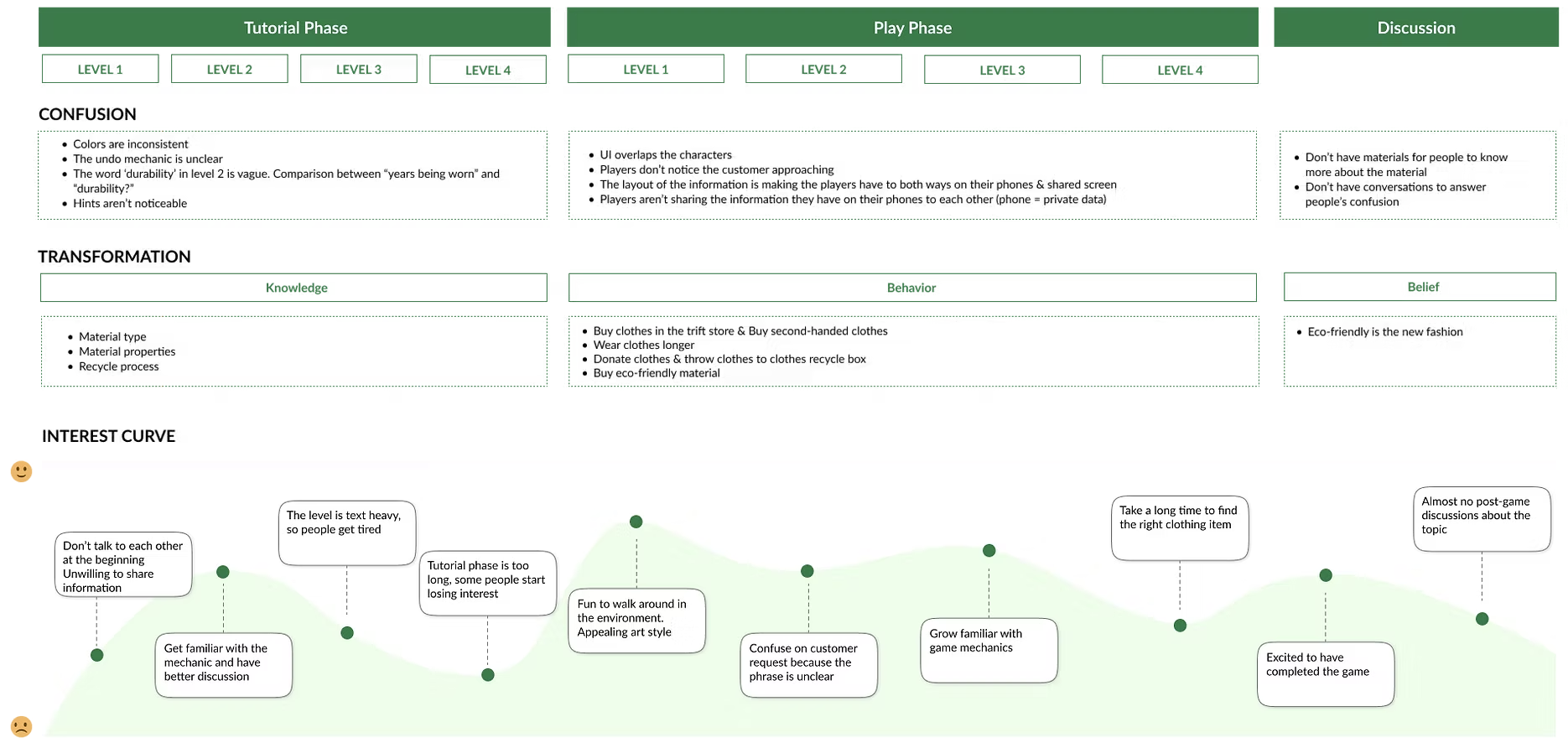
We pushed the first build of the game in Unity and conducted six usability tests. This helped us to understand how our game can transform people and improve user experience by creating an interest curve journey map.
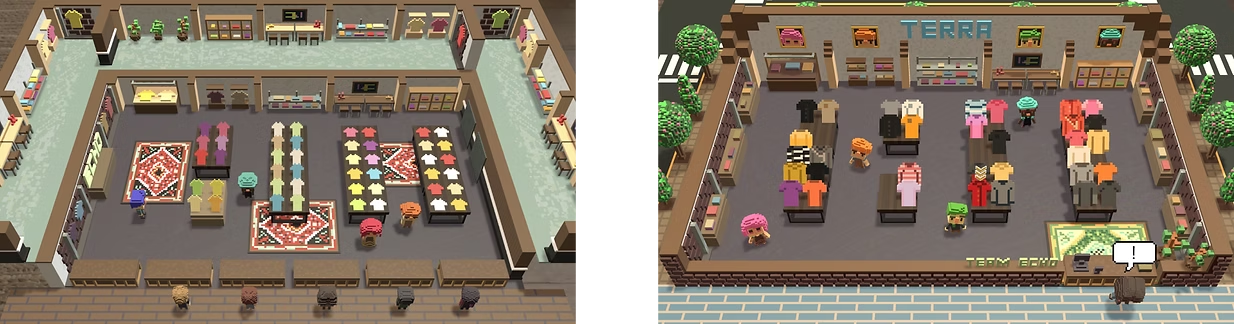
UI/UX BEFORE & AFTER

- INFORMATION HIERARCHY
Information hierarchy and controller shapes were important factors that significantly reduced the player-data-digestion-time and improved their engagement level to the game.
- SALIENCY CONTROL
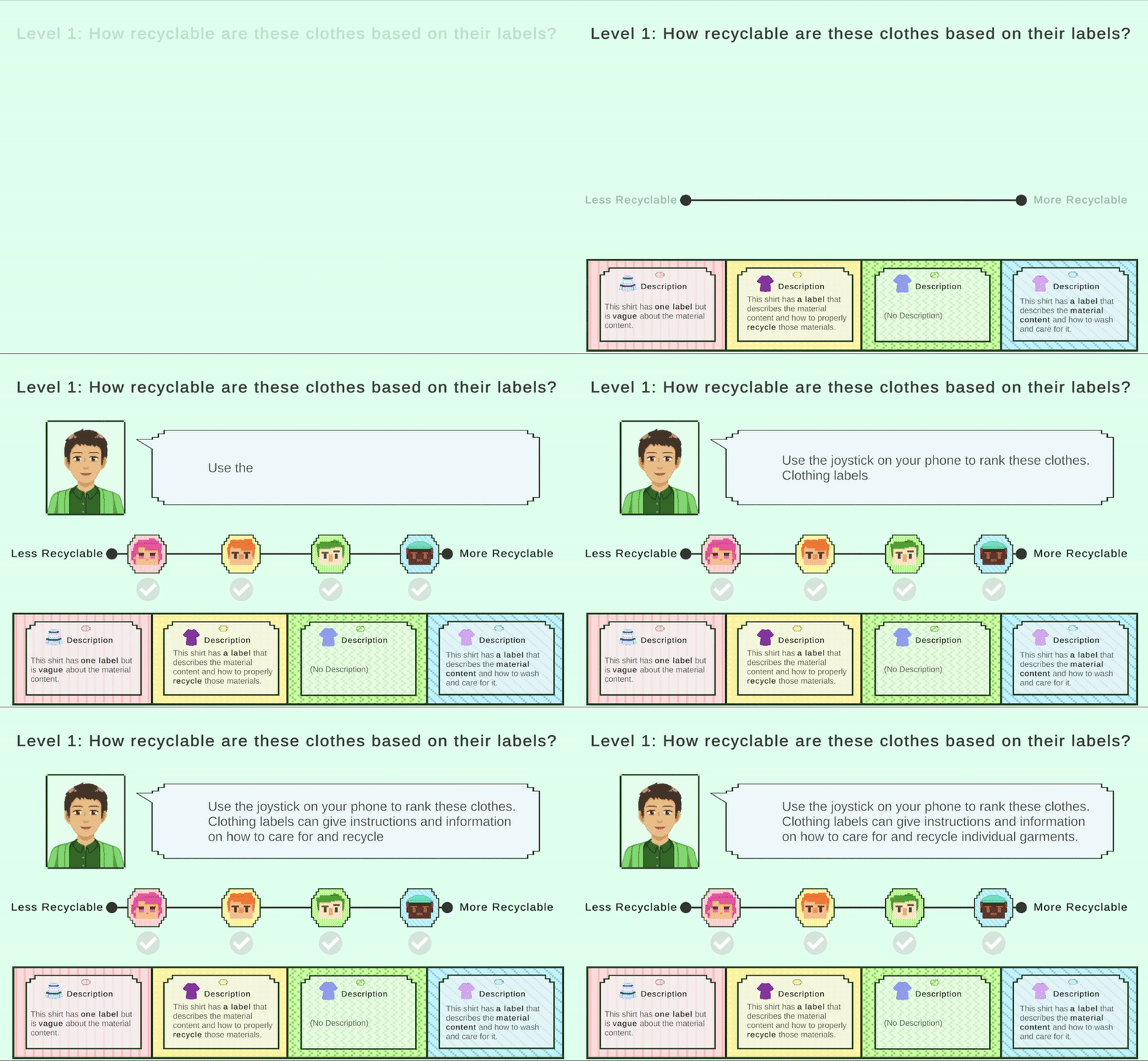
The practice of reading the clothing labels for the players was enforced by UI design choices. The player environment was also refined to help players focus on the playable area as well as the approaching AI customer
- ACCESSEBILITY
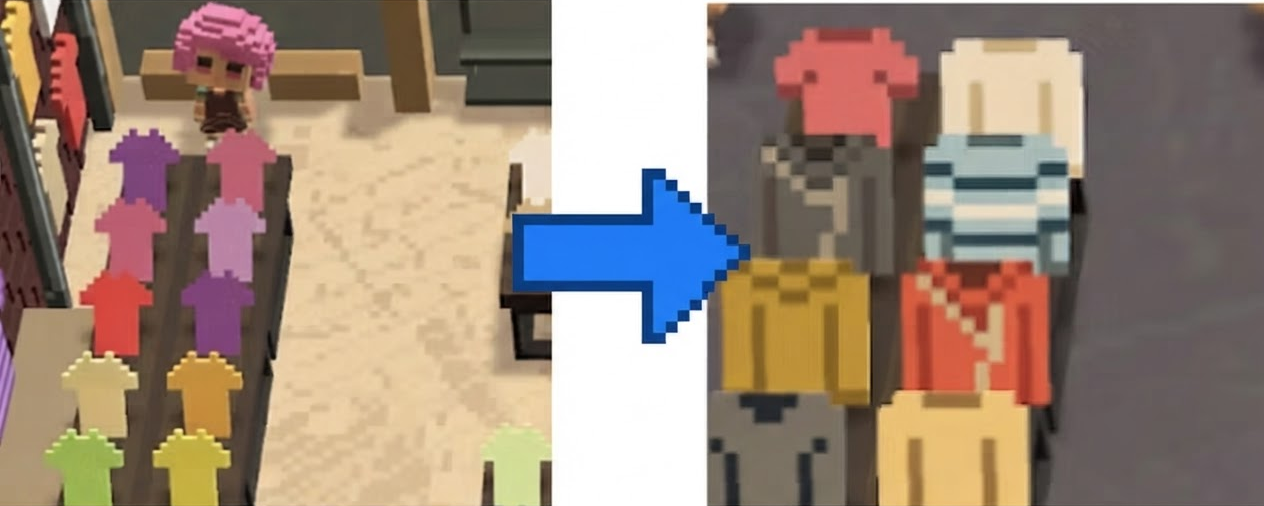
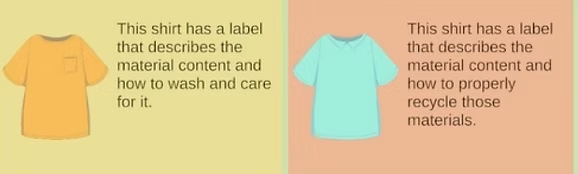
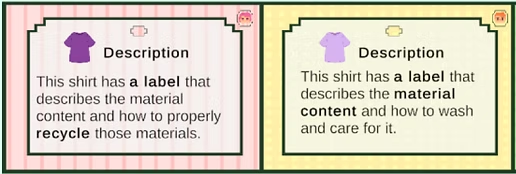
The illustrations were heavily taking up the space on the UI but not providing information for the players to solve each stage. For some colorblind players, the solid t-shirt images weren’t giving much hint to each levels.
We updated the UI to include patterned backgrounds and also centered and bolded important text for players to fast read each clothing descriptions.
BEFORE
AFTER
DELIVERABLE
Screen Features & Trailer Video
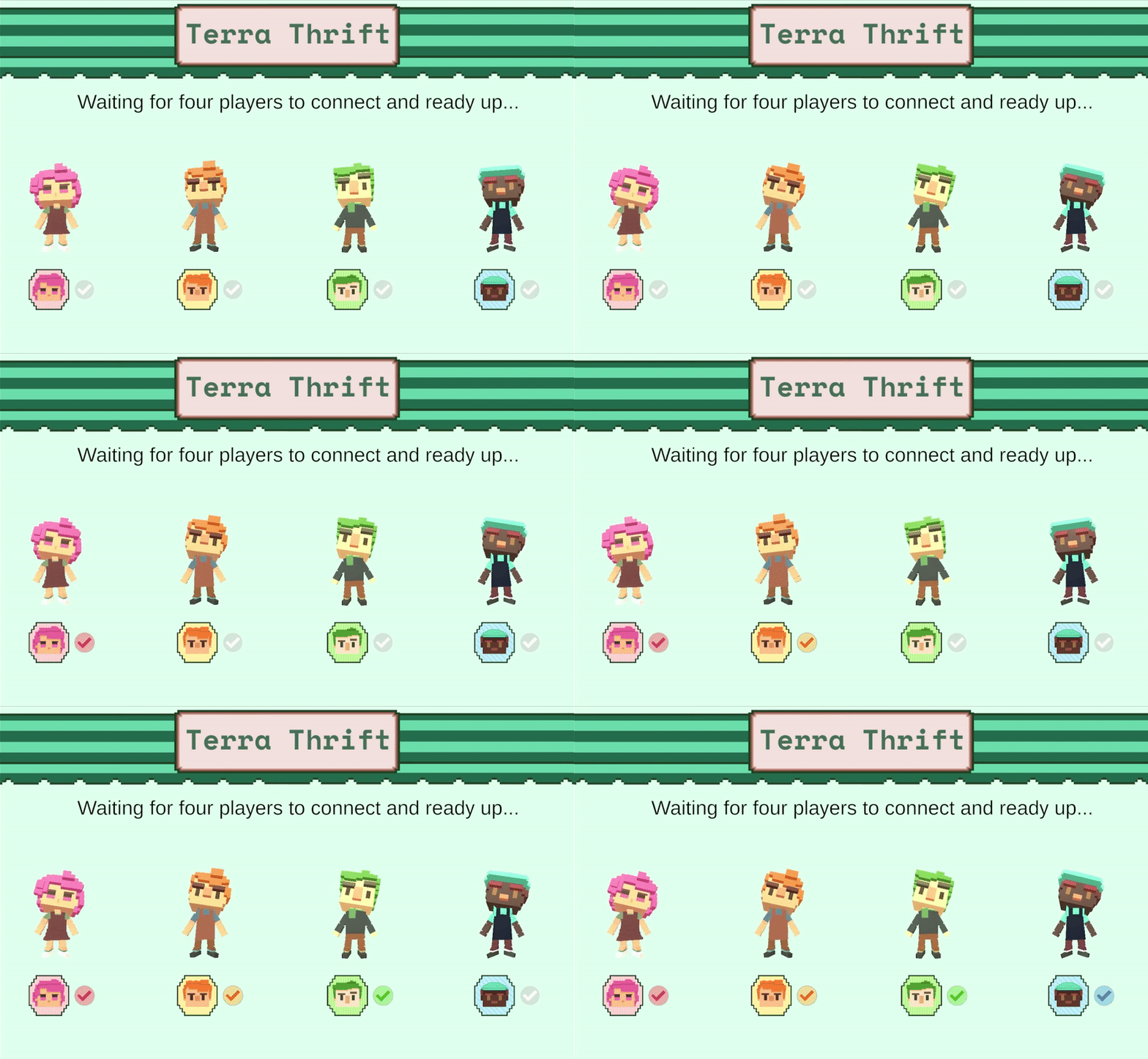
TUTORIAL PHASE
PLAY PHASE

GAMES FOR CHANGE JULY FESTIVAL
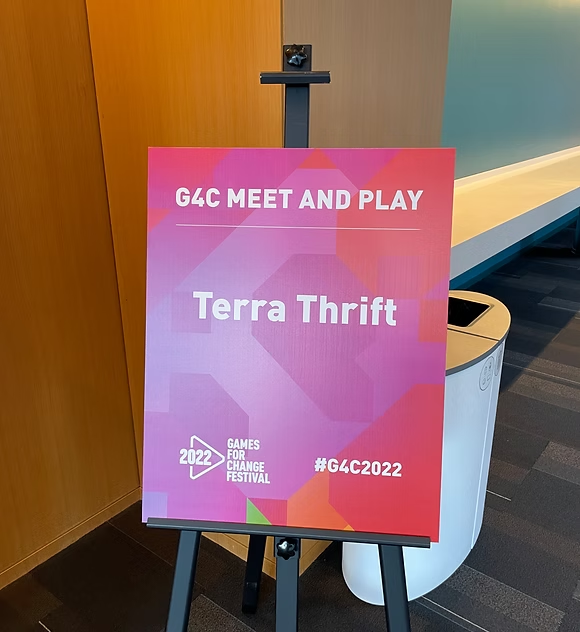
Meet & Play Terra Thrift
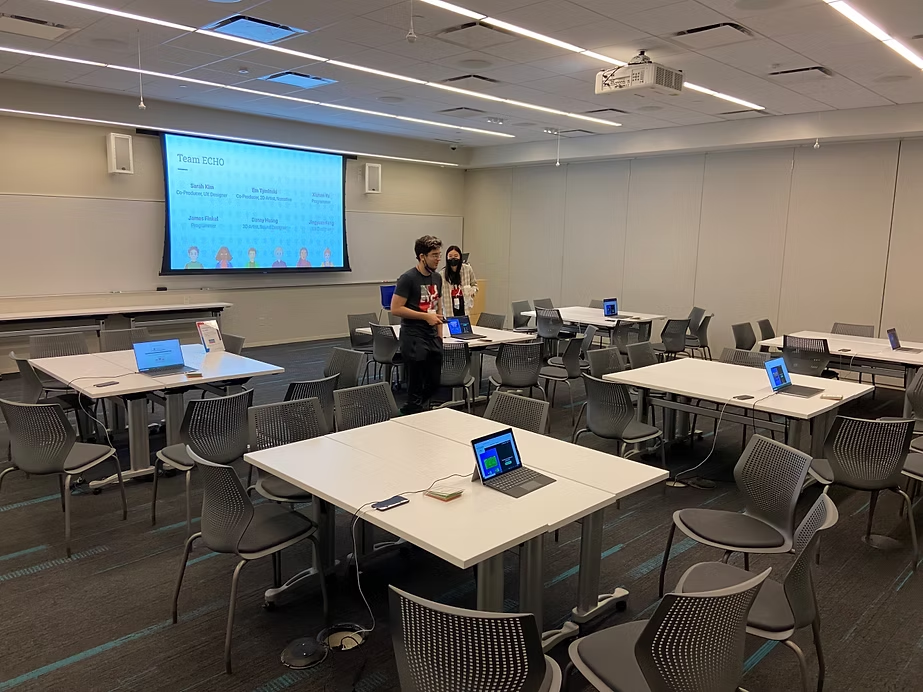
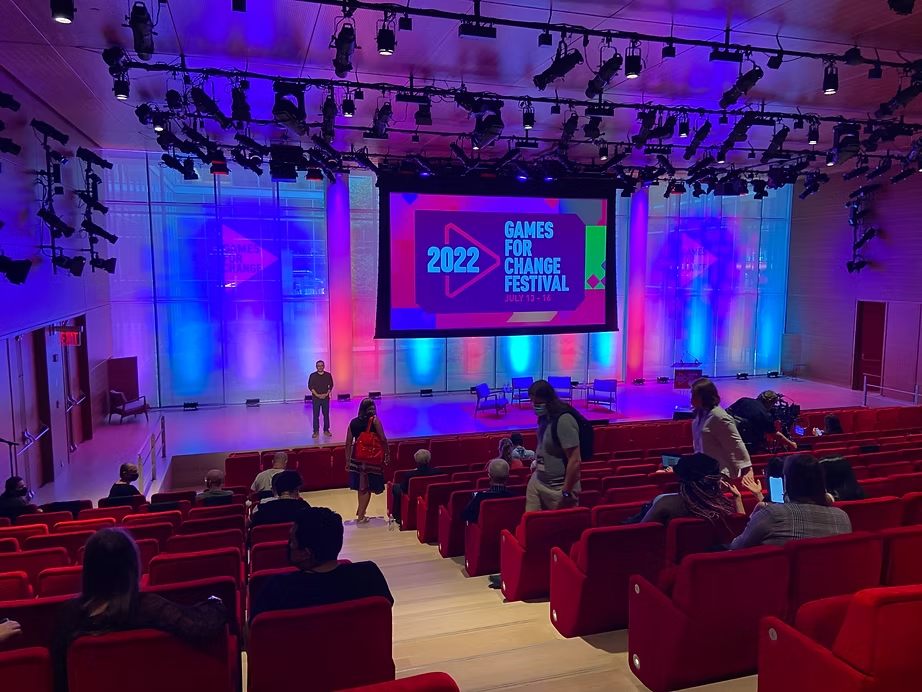
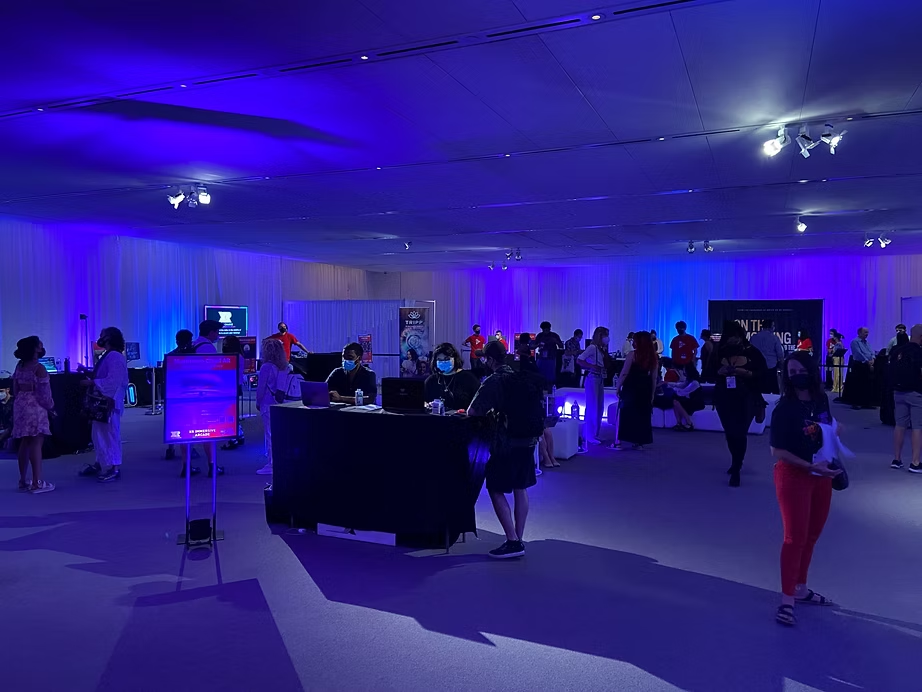
Upon the end of the project, we gathered back in July in New York City to attend the annual Games for Change Festival. Multiple attendees came by the room to learn about Terra Thrift and play the game.
POST-MORTEM
What I learned
1. RoadmappingHaving to decide on a sub-topic from the topic of environmentalism was a long process. Lingering on measuring the different possibilities of the sub-topics delayed our entire production process which costed a lot in time later in the development, testing, and refinement stages.
2. The Process of Honing InOur team encountered several dilemmas in the research process where we could not deduct our data to the ultimate transformational goal of the game. Because Terra Thrift was to be showcased at the Games for Change Festival, we learned the importance of decision-making and moving on to keep in time with the final delivery.
3. Setting a High-level PurposeThe high-level purpose acted as a guideline for structuring our game mechanics and player experience. It helped us parse and deduct research informations that diverted from the purpose and the transformational goal.
4. Overcoming Barriers and Working Around ThemThey changed from a 90 minutes session with everyone sit in the conference room to a rotated groups experience, people wait until 4 people shows up and start the game. However, we are fully prepared the location based experience. We made introduction videos to guide our players, we also made QR code for people to scan to our website which shows our development process.

Back to Projects